 The other day, I drove up the canyon to “check if it’s still there,” or so I told my daughter on the phone as I accelerated.
I didn’t have a question in mind as I drove. There’s always something waiting at home—unfinished work, loose worries—and lately there’s even the broader concern of what the winter hasn’t delivered up that way. But none of that explained the drive. It happened almost without forethought or consent.
“He does this daily,” my wife might say.
That possibility hadn’t crossed my mind until I reached the end of my favorite side canyon and turned around.
That turn was familiar. Too familiar.
I didn’t linger. I didn’t get out of the car. I simply pointed the hood back toward home and headed down-canyon, the way I have so many times before. And that’s when it surfaced—not as an accusation, just as a noticing.
I come here a lot.
Not always like this. Some days it’s a hike. Other days a bike ride, a long walk with the dog, or a slow climb on tired legs. And sometimes—more often than I would have guessed—it’s just this. A drive. In. Around. Back out.
I hadn’t labeled it. I hadn’t counted. I certainly hadn’t questioned it. But repetition has a way of asking questions on your behalf.
At what point does return become routine?
And when does it cross into something else?
What I sensed wasn’t discomfort. It was quieter than that. A mild curiosity. The kind that doesn’t demand an answer, only attention.
The practice itself wasn’t rigid. That was the first thing worth noticing. I wasn’t doing the same thing every day. I wasn’t chasing mileage, elevation, or streaks. Some days I moved my body hard. Other days barely at all. Some days the canyon asked for boots or pedals. Other days it asked only that I pass through.
That variability mattered.
Routine thrives on sameness. It wants inputs and outputs to match. Miss a step and the whole thing feels broken. But this didn’t break when it shifted. It adapted—allowing for energy, weather, time, and mood.
So I started asking different questions—less moral, more diagnostic.
Did this repetition narrow my life or widen it?
Did it help me avoid decisions, or return to them steadier?
Did I leave unchanged, or quietly recalibrated?
I’m not especially fond of the word ritual. It carries a stiffness I don’t recognize in what I do. Incense and incantation. Fixed times. Prescribed motions. That’s not this.
And yet, it’s the closest word I have.
Not because the practice is rigid—but because it’s repeatable without being identical. Because it holds meaning without demanding performance. Because it stays intact even when the form changes.
Ritual, at its best, isn’t about discipline. It’s about orientation.
What I gain from returning to the canyon isn’t accomplishment. It’s calibration. The nervous system settles. Perspective widens. The body remembers how to move without being instructed. Time stretches just enough to feel human again.
Still, there is a cost.
Time, mostly. Time that could be spent clearing inboxes, finishing projects, being efficient. Fuel burned. Miles added. The quiet risk of using the canyon as a soft place to hide when something harder is waiting downstream. Left unattended, even good returns can turn into hiding places.
But avoidance shrinks the day. This does not.
When the canyon becomes an excuse, it loses its power. When it becomes a place I pass through on my way back to responsibility, it does its work and lets me go.
So I’ve learned to test it.
Not by frequency, but by effect.
Most of us already know the difference. We just don’t like what it asks us to give up.
If the return makes me smaller—less willing to engage, slower to decide, more insulated from people—then it’s drifted toward obsession. Obsession narrows. It protects itself. It insists.
But if the return makes me more available—clearer, steadier, more willing to carry weight—then it’s doing something else entirely. Then it’s a pattern that strengthens rather than consumes.
That’s the line I watch now.
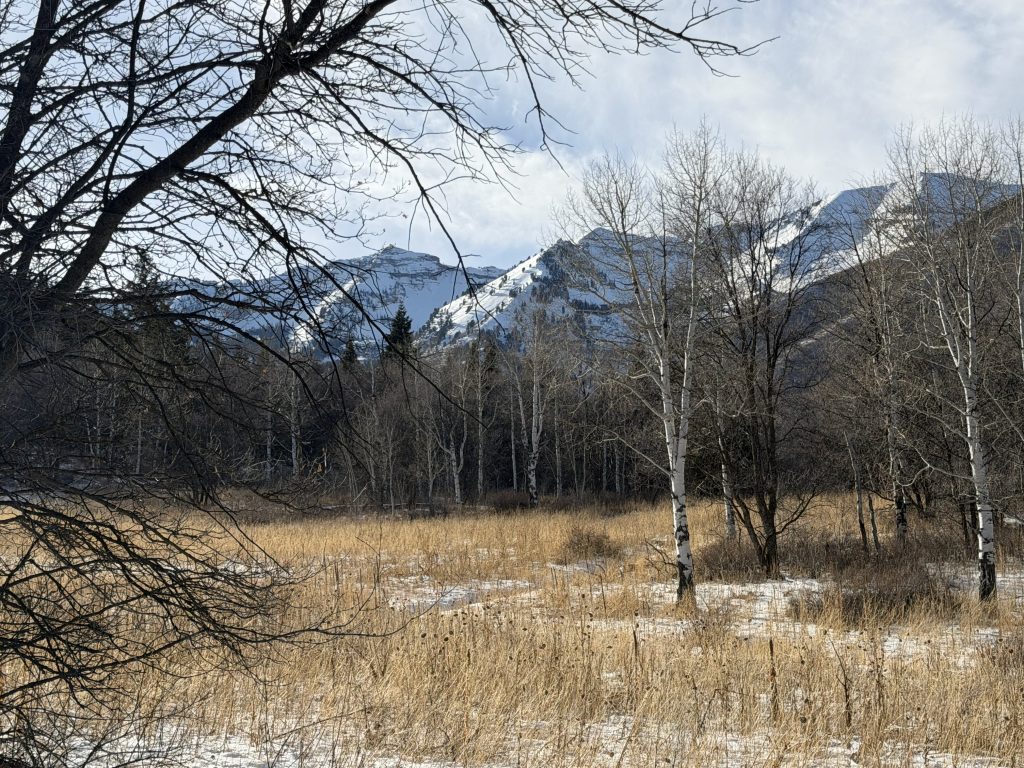
I began writing this after glancing at my calendar to spot today’s window for the drive. Almost immediately, I imagined myself sitting in the truck at the turn-around, senses lighting up with stored memory: deep snow, spring mud, family piled in the car, dogs pacing in the back. Passing back down through flocks of wild turkeys. Catching a glimpse of a deer at the edge of the trees.
All of it arrived at once.
Not as longing. Not as escape. But as readiness.
That may be the most productive thing about something so constant: it stores experience in a way that can be accessed all at once, without effort or explanation.
Tomorrow, I’ll drive up again.
Not to check if it’s still there—but to remember that I am.