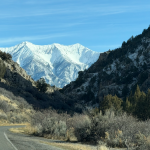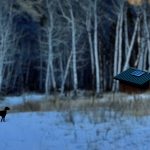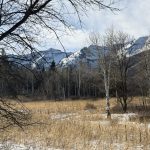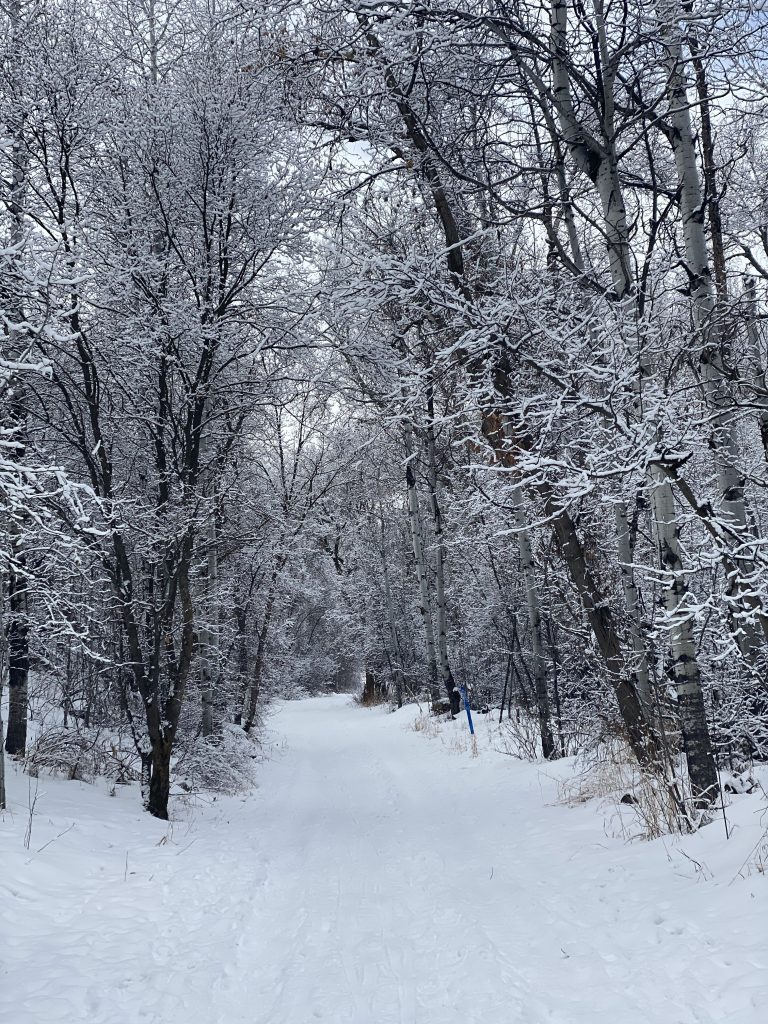
We were the first vehicle at the trailhead that morning. Snow was falling, not sideways or dramatic, just steady and confident. South Fork Canyon sat in that narrow winter window where the temperature hovers just above indecision: cold enough for clean flakes, warm enough to make you question your wax.
Before leaving, I told my wife I was glad for my old jacket, twenty years my backcountry touring companion, and still perfect from the teens to forty degrees. It repels moisture without drama, breaks wind without stiffness, warms without weight. I know exactly how it performs. No questions asked.
But I was also wearing new boots, which eventually raised several questions.
We headed out expecting first tracks but were beaten — likely late the night before or just ahead of dawn — by a man I decided to call Earl and his dog of some unknown breed. We followed their tracks nearly the entire way, watching them transition from crisp and defined to less defined dents as the fresh snow thickened.
My skis were useless going up since the snow was too new and the temperature barely above freezing. Multiple types of wax failed to prevent snow from attaching and dragging me down, so I took them off and carried them most of the way in. I trusted that with some speed, they would be ice-free on my glide out
As we climbed, I felt the faintest hotspot in my heels. Nothing urgent. Just possibility. In the wrong terrain, a small hotspot prompts many questions. Was it the socks? My stride? The way I was carrying the skis?
I realized something subtle: I had assumed the boots were born broken in. If they didn’t yet know how I move, that was their problem, not mine.
The jacket required nothing from me.
The boots demanded attention, whether I liked it or not.
Some things already know you.
Others are still deciding.
An old jacket doesn’t predict the weather. It proves you’ve survived enough of it. New boots may promise comfort, but only eventually, but never without adaptation.
My thoughts switched gears as I watched my dog Scout running ahead, doing her version of trail maintenance — breaking path, darting into the pines, scanning for whatever small evidence of life might justify the effort. When Earl’s tracks finally veered left, we turned right, toward the old-growth pines and the quiet approach to Big Springs.
For the first time that morning, we were making true first tracks.
By then, the hotspots on my heels were screaming at me
A half mile later, we crested out and I finally clipped in to my skis. Zipping my old jacket to my chin, I pushed off and discovered that the discomfort in my boots vanished as I settled into a glide, standing still while the world moved beneath me. My weight compressed the surface with a soft crunch, like packing a snowball between cupped hands, followed by a muted thump and the faintest vibration up through my leg. Not a buzz. Just feedback. Terrain speaking plainly.
Scout seemed genuinely surprised that I could now move faster than she could. Once I found a rhythm she approved of, she mostly trailed behind. Every so often, she dashed ahead and looked back as if to say, “We can do better than this.” I wiped falling snow from my eyes as I pushed along
By the time we came across Earl’s tracks again, they were nearly gone. Even ours were softening at the edges. The snow continued its quiet erasure.
When we reached the truck, it was still just us in the parking lot. Scout had collected a couple pounds of snow below her elbows and hocks, so I broke them free as gently as I could and lifted her into the warm truck to let the rest melt on their own.
The snow kept falling.
Driving home, I realized something else. While my old jacket required nothing new from me, it was precisely because I’d shaped it over time. My new boots were another matter — we were both having a new experience that day. And they’d never reach the fit and comfort of my old jacket unless I was willing to give them an equal share of time. By the time I pulled them off, each heel had its own blister to make the point.
While I wanted my boots to instantly deliver the certainty of my jacket, they’d only eventually do that job.
Old jacket. Instant gratification.
New boots would come along eventually
My blisters would heal. My new boots would break in. Future times together would do the job.
And like fresh snow in South Fork, my old jacket will eventually wear out and disappear. On some future winter day, it’s awkward-fitting replacement will similarly provoke questions while I ski in and out wearing well-fitting boots that know exactly how to perform.