
 I first learned to read the clock in abouts.
Half past. Quarter till. Top of the hour. About nine o’clock.
Before atomic time and the internet, even the first digital watches got ahead of or trailed exact time. You adjusted them by feel. A minute fast. A little slow. The clock wasn’t wrong; it was close enough. Time was something you read, not something you obeyed.
It’s harder now for many people to know what the big and little hands on a clock are trying to say. Exactness has become the way we tell time.
What Switched?
Nature, meanwhile, never made that switch.
Seasons arrive early or late. Storms hesitate, double back, or come all at once. Rivers don’t keep appointments. Even light bends, scatters, and arrives with variation. The natural world works in ranges and thresholds—not because it is careless, but because it is alive.
So are we.
For years I assumed the human body had a fixed operating temperature: 98.6 degrees. It was presented as fact—clean, exact, universal. Only later did I learn that even this number is an average, drawn from another century, different tools, different bodies. Research now shows that “normal” body temperature has been drifting for decades. Not broken. Not wrong. Just changing. Now closer to 97.9 degrees—and still drifting, shaped by indoor heat, cooled air, and quieter lives.
The body was never digital. It doesn’t flip from well to unwell, from ready to exhausted, from healed to injured. It moves by signal and threshold—warmth, tightness, fatigue, relief. Health isn’t precision; it’s resilience. Healing isn’t linear; it’s responsive.
How We Know
For most of human history, this wasn’t surprising.
Time was told by shadow and season. Navigation came from landmarks and stars. Skill was learned by feel—a hand in ocean currents, a glance heavenward. Knowledge traveled by story—repeated, varied, remembered—not copied exactly. Meaning survived through pattern, not replication.
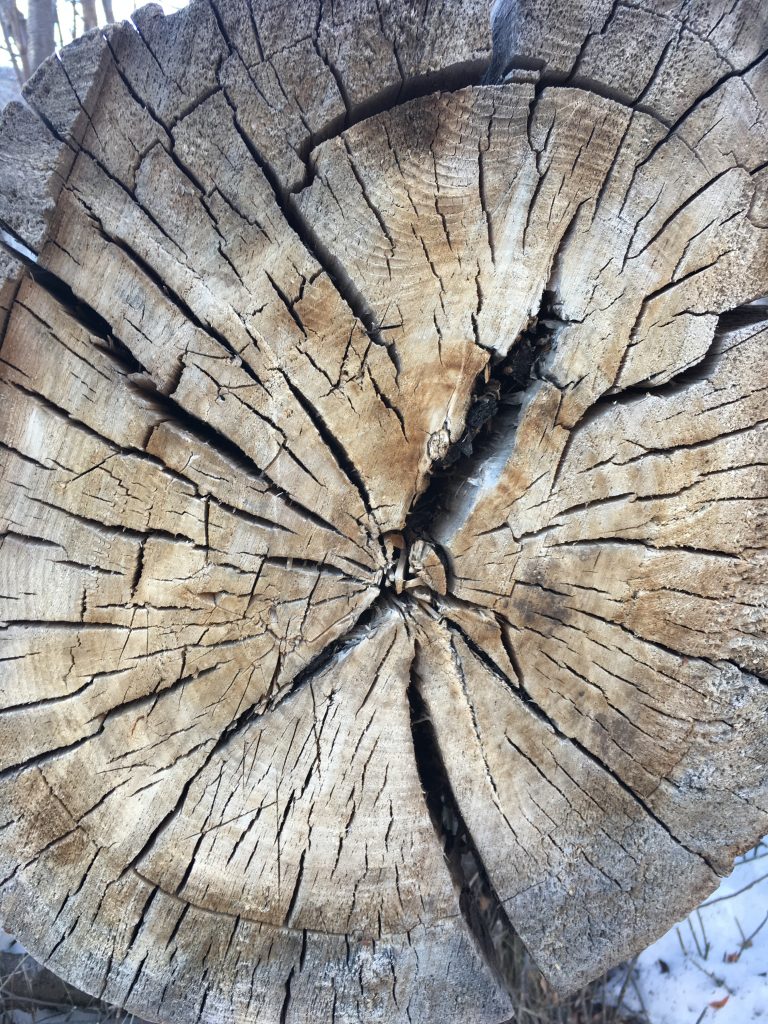
Trees tell the same story. Their rings aren’t uniform. Wide years and narrow years sit side by side—records of drought, abundance, fire, recovery. The tree doesn’t erase the hard seasons. It incorporates them. Growth isn’t smooth. It’s cumulative.
Even now—surrounded by satellites and sensors—we can see the limits of exactness.
I can stand still and watch the amorphous blue dot on a map app drift. A few feet one way. Then another. The phone insists I’m moving when I’m not. GPS, for all its sophistication, doesn’t give a point. It gives a range. A probability cloud. Close enough for travel. Never absolute.
The system works because approximation works.
A Sideways Glance
Some things, in fact, become clearer when you stop staring straight at them.
Peripheral vision notices motion before detail. It catches the flicker, the approach, the shift—what matters first. Fixation narrows; awareness widens. We sense danger and beauty from the edges first.
Many Eastern traditions say the same about understanding. Pull a plant from the ground to study it and you can name its parts—but it dies in your hands. Leave it rooted, and you begin to notice the soil packed hard around the base, the way morning light leans in from one side, how water disappears faster on the slope than in the hollow. Context teaches what extraction cannot.
Memory works this way too. We don’t store the past as a perfect record. We keep what mattered, what warned, what guided. The story shifts slightly each time because life has moved on since the last telling.
The digital turn gave us something powerful: coordination at scale. Precision we could share across distance. That mattered. It still does.
But it also narrowed our tolerance for ambiguity. A minute late became late. A number out of range became a problem. Variability began to look like failure. We stopped reading systems and started enforcing them.
Yet the world never complied.
Biology still adapts instead of conforming. Ecosystems still self-correct through imbalance. Even modern science now describes reality as probabilistic—patterns emerging, dissolving, re-forming.
Reading the Hands Again
Approximation, it turns out, is not error. It is intelligence.
There’s a quiet line of scripture that has always felt more descriptive than poetic: “The wind bloweth where it listeth… and thou hearest the sound thereof, but canst not tell whence it cometh, and whither it goeth” (John 3:8). Not a failure of knowledge—an acknowledgment of how living things move.
And long before modern science caught up, Lao Tzu was pointing to the same truth: that forcing clarity can destroy understanding, and that wisdom comes from letting things be long enough to reveal themselves.
Exactness is a tool.
Approximation is a posture.
One seeks control; the other allows participation.
I still wear a watch. I still check the time. But I’m learning again to read it in abouts—to notice when something is almost ready, when a season is turning, when rest is overdue or healing has begun.
Exactness tells us what time it is.
Approximation tells us when it’s time.




If only I could write as elegantly as you… thought provoking.
I think it’s about time to send out another family newsletter!
This is really wonderful. It doesn’t give me an excuse to think about time differently, it gives me permission to think about time correctly. Thanks for the eye-opening experience!
Thx, Brian. Appreciate your support and insights.