In storytelling, a throughline is the line of force that carries a narrative forward. It’s the path a story naturally wants to take—the most direct route from premise to resolution. When it’s sound, everything else can hang from it. When it’s unexamined, the story still moves, but it moves by gravity rather than judgment.
Enduring paths are shaped, not followed.
In the natural world, there’s a closely related idea: the fall line.
A fall line is the path water and gravity take as they move downhill—the steepest, most direct descent. Skiers know it instinctively. Trail builders learn to respect it early. Left alone, water will always find it. And left unmanaged, the fall line becomes a problem.
Skiing the fall line is glorious. The slope opens, the turns link, and everything feels aligned. Hiking straight down a steep fall line, on the other hand, can test your quads and your balance. Still, there’s something unmistakable about it. Like writing a good story, the line just feels right. My legs always know when I’ve wandered off center—long before my head does.
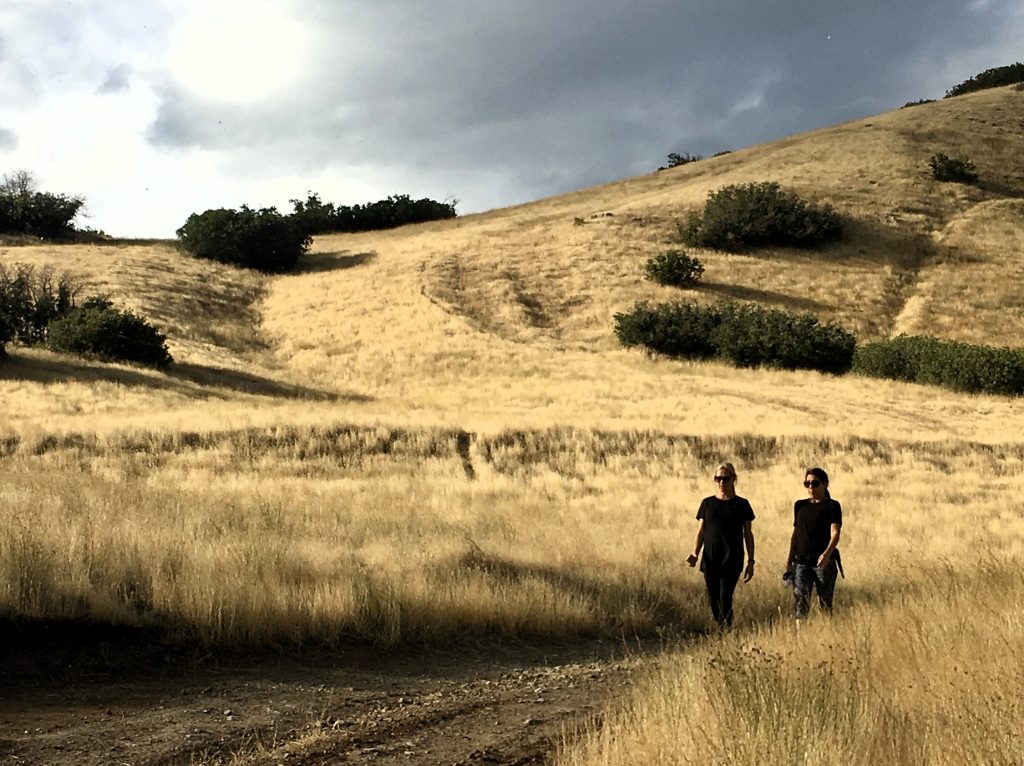
Last week, I wrote about quietly abandoning an old trail and encouraging a better one instead, in a piece called Against the Grain. A rutted fall-line descent that technically worked had begun to erode the hillside, while a new diagonal line—first traced by elk and horses—shed water and endured. Blocking the old route allowed the land to recover. The new path held.
Trails cut straight down a slope don’t endure. They erode. They turn into ruts and chutes that damage the land and eventually destroy themselves. The force is too concentrated. The descent is too clean.
Good trail design doesn’t fight gravity; it redirects it. Switchbacks interrupt the fall line not to slow progress, but to preserve the terrain. The best trails still move downhill—but they do so with judgment. They shed water instead of channeling it. They last.
Stories behave the same way.
The most obvious narrative path—the neat arc, the expected turn, the familiar payoff—is often the fall line. It works. It moves. It feels efficient. And that efficiency is precisely why it so often wears out the ground beneath it. When writers follow the fall line too closely, stories become thin where they should be layered, fast where they should linger, resolved where they should remain open.
The fall line is what happens when movement replaces judgment.
This isn’t a failure of talent. It’s a failure of stewardship.
A true throughline isn’t the path of least resistance; it’s the path of sustained coherence. It’s the line that can carry weight without collapsing. Sometimes that means resisting the most obvious descent—introducing friction, delaying resolution, or choosing complexity over clarity.
Fall lines appear far beyond the page.
They show up in organizations that default to the org chart when pressure rises—routing every decision upward because it’s faster, even as trust thins and initiative drains away. They show up in teams that rush to alignment before disagreement has been worked through. In personal habits that feel natural but quietly concentrate damage over time. The fall line is rarely malicious. It’s simply unexamined momentum.
Gravity is not the enemy. The assumption that gravity is wise is.
Enduring systems—stories, trails, cultures—are shaped by people who intervene early. Who notice where force is gathering and redirect it before it cuts too deep. Who understand that ease is not the same thing as health, and speed is not the same thing as progress.
This work is rarely dramatic. Trail builders don’t announce switchbacks; they cut them quietly, one careful pass at a time. Editors do the same. Leaders do too—interrupting default behaviors, reshaping flow, asking questions that slow a group just enough to keep it intact.
Over time, the old fall line grows over. Grass returns. The hillside heals. The new path remains—not because it was faster, but because it respected the terrain.
The most durable throughlines—on the page and off—are rarely the ones that descend most cleanly.
They’re the ones designed to endure weather, weight, and time.
Gravity will always pull.
The question is whether we let it decide the path.