I haven’t written much the past few weeks.
Not because life has been full. More because it hasn’t. Just not in ways that resolve into something clear enough to name. It’s been a stretch of in-between—one of those seasons that doesn’t announce itself but quietly takes over.
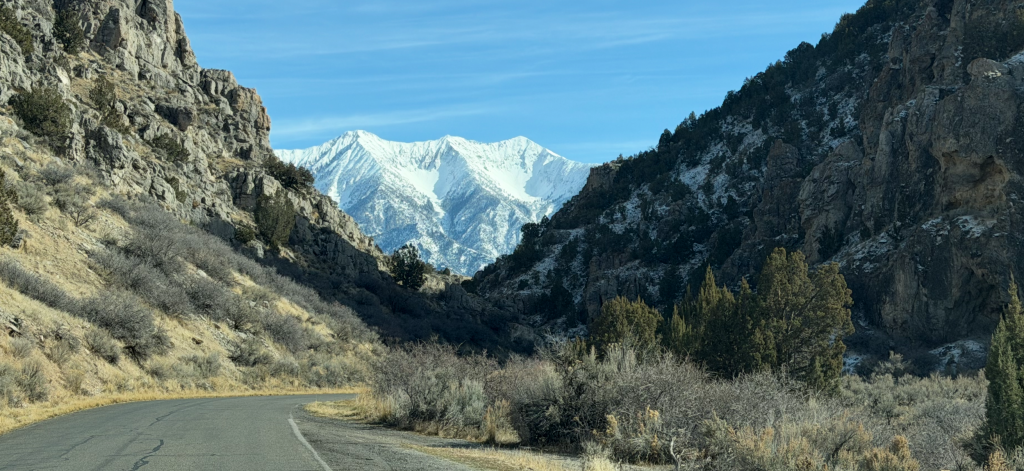
They call it a shoulder season—the slope below the peaks.
Right now, it doesn’t feel like a slope. It feels like a pause.
Part of that is literal.
Ski season is over. Not officially, maybe, but practically. What’s left is thin, patchy, or soft in a way that reminds you more of what was than what is. Even the corn snow has come and gone. At the same time, the trails aren’t ready. Too wet. Too fragile. Ride them now and you leave your mark in the worst way—deep ruts that last longer than your impatience. I don’t want to be that guy.
And part of it isn’t.
Projects stall or blur. Plans lose their edge. One day feels like progress, the next like you’re starting over. Nothing stays settled long enough to trust.
So there’s this gap.
No clean way to move. No obvious rhythm to step into. Just a kind of suspension.
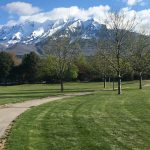
Even the world outside seems to mirror it. Blossoms erupt one day, full of promise, and by the next morning it’s snowing again. Grasses push green through the ground, only to be flattened under gray skies that turn to cold April rain. More than just weather, it’s never quite clear what’s happening.
William Bridges called this the “neutral zone”—the stretch where the old thing has ended but the new thing hasn’t begun. It’s not dramatic. It doesn’t feel like progress. But it’s real, and it has its own kind of gravity.
You feel it not just in your calendar, but in your body.
The body already knows this pattern.
The sympathetic nervous system carries you forward—effort, output, movement. The parasympathetic nervous system brings you back—recovery, repair, stillness. Not opposites so much as a rhythm.
You can feel it most clearly in your breath.
Inhale, and the system rises.
Exhale, and it softens.
And then—almost unnoticed—the pause.
After the inhale, before the exhale. Or at the end of the exhale before the next breath begins.
For a moment, you’re doing neither.
Most of us rush it. We reach for the next breath before the last one has fully let go. But if you stay with it—even briefly—you can feel something settle. The system recalibrates there. Not in effort. Not in recovery. In release.
That’s what this season feels like.
Not effort. Not rest. Not forward motion.
Just a pause.
And like the pause in breathing, it can feel uncomfortable. There’s a subtle urge to override it—to make something happen.
In life, that shows up everywhere.
Pushing a decision before it’s formed.
Filling empty space just to avoid the quiet.
Jumping to the next thing because the current one has lost its edge.
It carries a kind of uneasiness—an awkward, unsettled feeling. The instinct is to fix it. To get back to something that works.
But what if this stretch isn’t meant to work the way the others do?
What if it’s meant to reset you?
There’s still work to be done—just a different kind. Not performance, but preparation. Fixing what got pushed aside. Cleaning out what’s been cluttered. Closing loops that have been left open. Letting your mind catch up to your pace.
Less visible work. But not lesser.
There’s a reason good operators build slack into their systems. Clayton Christensen observed that periods that look unproductive on the surface often set up the next meaningful shift underneath—not by force, but by making space for it.
That’s what this is.
A kind of unassigned time. Not empty—just not claimed by any one thing.
And maybe the discipline here is not to rush through it.
To let the trail dry.
To let things breathe.
To let clarity return on its own terms.
Because it will settle.
Another inhale always comes. Another season always turns. The question is whether you meet it ready—or whether you arrive still carrying the friction of the one you tried to force.
Shoulder seasons don’t offer much in the way of visible progress. No summit. No clean run. No perfect ride.
But they’re the breath between breaths.
And if you let them be what they are—if you don’t rush the pause—they quietly decide the quality of everything that comes next.