While I slept well the last few nights from cold temperatures, I couldn’t help but think about the orchards.
That’s the trade this time of year.
We rest better when the air cools off—windows cracked, deeper sleep, a sense of reset. But nearby, those same temperatures tighten the margin. A few warm days can pull everything forward—buds swelling, blossoms opening—only to be tested by a single cold snap.
And it doesn’t take much.
Around 28 degrees, a short stretch of exposure can damage open blossoms. A few degrees lower, even less time is needed. Once a tree commits to bloom, it’s vulnerable.
Growth invites risk.
Each blossom is a one-to-one proposition. One blossom, one piece of fruit. Lose the bloom, lose the peach. Not abstractly—literally.
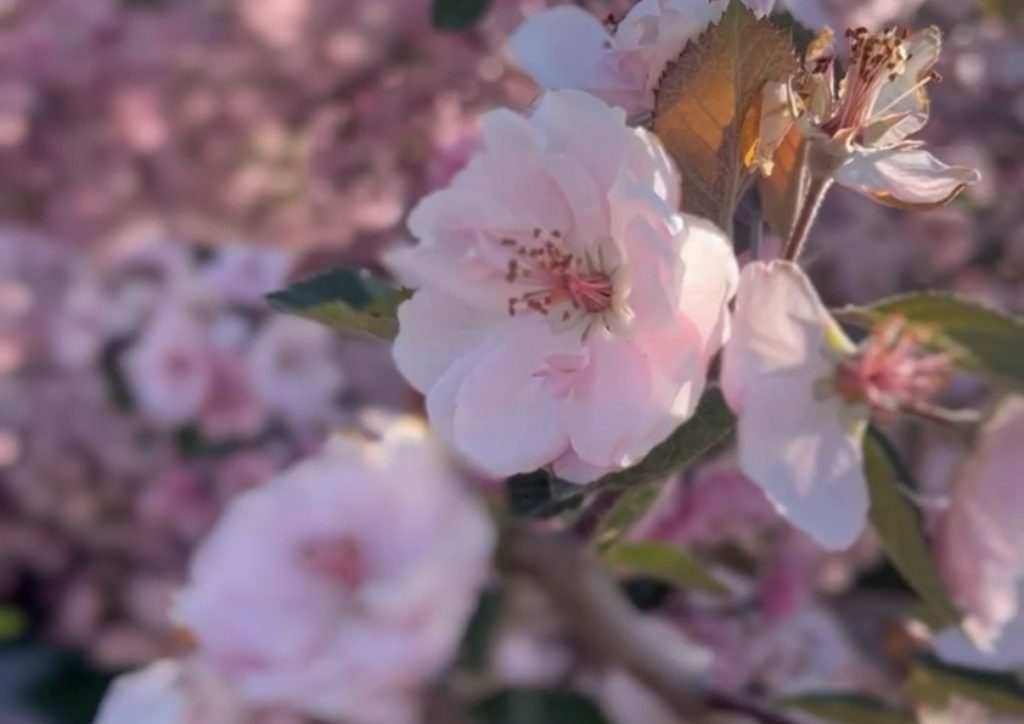
Drive past the orchards near Elberta, Utah this time of year and you’ll see thousands of peach blossoms, each one carrying that same equation. You start to realize the harvest isn’t decided at the end of the season. It’s decided now—in a handful of hours most people sleep through.
There’s a pattern in that.
We tend to prefer stability—steady conditions, predictable progress, fewer surprises. But in most systems that actually produce something meaningful, it’s the variation that does the work.
Utah’s climate is a good example. Warm days, cold nights. That daily swing—what scientists call diurnal variation—creates the conditions for exceptional fruit. Sugars build in the heat. Acids hold in the cold. The result isn’t just sweetness, but clarity and balance.
It’s why a tree-ripened Elberta peach from this region stands out. Not because the conditions are easy—but because they aren’t.
The same forces that produce the best outcomes also introduce the most risk.
Longer, more stable growing seasons would reduce the chance of loss. But they would also reduce the edge—the very thing that makes the outcome distinct.
Constraint filters. Variation sharpens.
The parallel is hard to ignore.
People don’t grow from constant conditions. They grow from cycles—push and recovery, clarity and uncertainty, momentum and pause. Too much stability, and things flatten. Too much volatility, and things break. But in the right range, something better forms.
That range rarely feels comfortable while you’re in it.
It feels like a stretch of in-between. Progress that doesn’t quite hold. Starts and stops. Signals that change faster than you’d like. The temptation is to smooth it out—to stabilize too early, to avoid the swing.
But the swing is doing something.
Decisions are being made in it. Capacity is forming. Direction is clarifying—often before it’s visible.
By the time the outcome shows up, the conditions that shaped it are already gone.
So the question isn’t how to eliminate the highs and lows.
It’s whether you can stay in the range long enough to become something worth keeping.