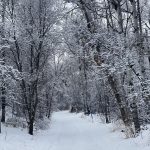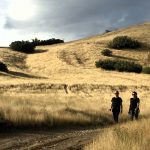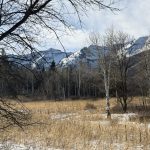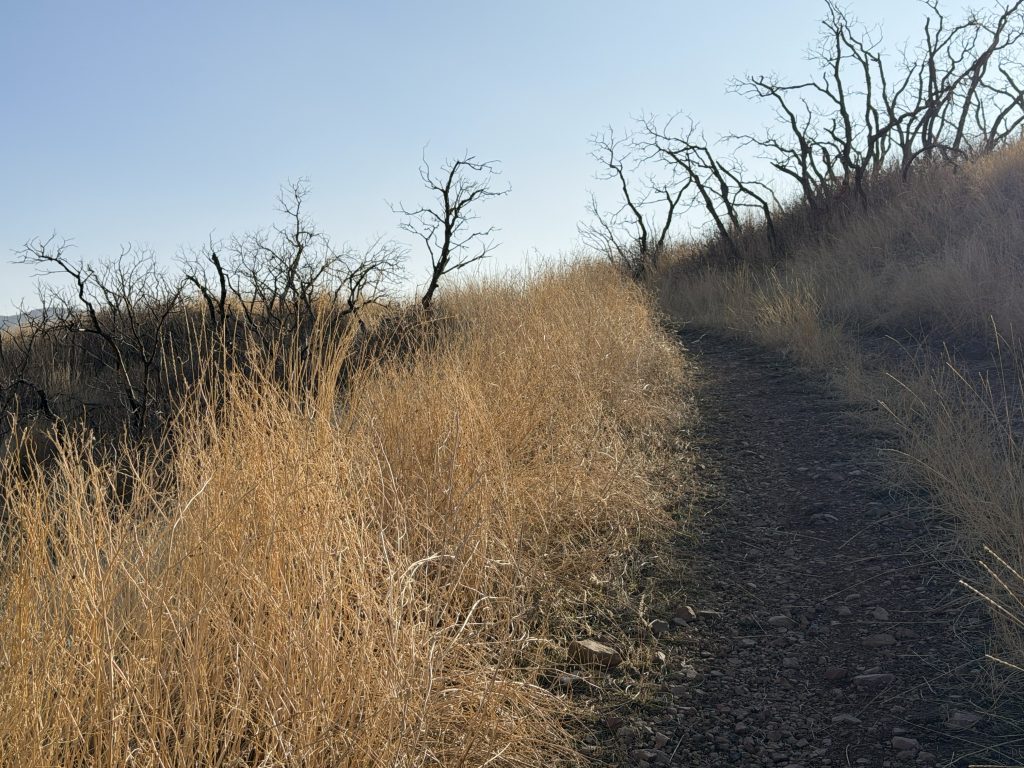
It wasn’t that long ago that a new trail began to appear across a slope that had previously been accessed only by a steeper line. At first, it wasn’t really a trail at all—just deep horse and elk tracks pressed into late-spring mud once the frost finally let go. I noticed it immediately. Their instincts mirrored my own.
I’m not one to cut new trails willy-nilly, but something felt right about this one. Necessary, even. So I gathered rocks and branches and gently blocked off the old path—deeply rutted from years of runoff and spinning mountain-bike tires. It had done its job, but not well. And it wasn’t especially kind to the hillside it crossed.
The new line, I sensed, would do the job of a trail better. It wouldn’t turn into a rock-rolling chute every time it rained, thawed, or baked dry. It would shed water instead of concentrating it. It would endure.
Which, over time, it has.
The old route is now grown over—quietly restored to match the grasses and brush around it, as if it had never been there at all.
Yes, I took it upon myself to set the next pair of tracks along that slope, walking it in careful, baby steps so it would be clear for the next person who came along. Today, it’s marked on the map, printed on a large wooden sign at the trailhead that sits at its base.
What struck me recently wasn’t that a better trail had emerged—but that it hadn’t emerged on its own. Left alone, the slope did what slopes always do. Water rushed, tires spun, soil loosened, and a convenient path slowly became an agent of damage. No bad intent. No failure. Just gravity choosing the easiest line downhill.
The new trail held for a different reason. It distributed force. It softened angles. It invited slower movement. It didn’t fight gravity—it worked with it.
That, I’ve come to believe, is the quiet truth about health.
Unhealth requires no effort. It accumulates while we sit, while we rush, while we assume that standing still counts as neutral. Health, by contrast, is never accidental. It’s the line you keep walking, even when no one is watching.
Peter Attia often describes health not as the absence of disease, but as the presence of capacity—the ability to do work today without borrowing too much from tomorrow. Muscle, metabolic flexibility, mitochondrial function—these aren’t built in bursts. They’re built through effort that can be repeated. Sustained. Recovered from.
That’s what continuity actually is.
Not intensity.
Not optimization.
But durability.
In nature, durability is what prevents erosion. Trails that shed water gently don’t need constant repair. Rivers given room to meander don’t tear themselves apart in every storm. Systems endure when force is spread out over time.
Our bodies follow the same rules—something I’m learning more about every day.
Which is why slowing down feels so counterintuitive—especially to people wired for progress. We’ve been taught to equate health with strain, discipline with exhaustion, virtue with effort you can’t sustain. But constant intensity narrows margins. It spikes stress. It creates systems that only work on good days.
Zone 2 movement—the long walk, the easy ride, the unhurried run—does something far more useful. It strengthens energy production at the cellular level. It trains the heart without triggering alarm. It builds a body that wants to show up again tomorrow.
It creates a path the system prefers.
Jesus named this pattern long before physiology had language for it: “Take my yoke upon you… for my yoke is easy, and my burden is light.” A yoke isn’t the absence of work. It’s a design that distributes load so the work can continue. Properly fitted, it makes endurance possible.
That’s the invitation here.
Health isn’t about doing nothing.
It’s about choosing a burden you can carry daily.
Like the trail on that hillside, the goal isn’t the fastest line. It’s the one that doesn’t wash out. The one that endures weather and neglect. The one that lets the land—and the body—remain intact.
Health isn’t fragile.
But it is directional.
What we don’t tend, time will take.
Sometimes faithfulness looks like nothing more than choosing the line that holds—and walking it again in the morning.