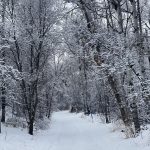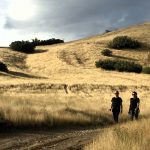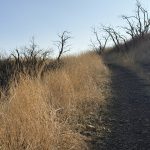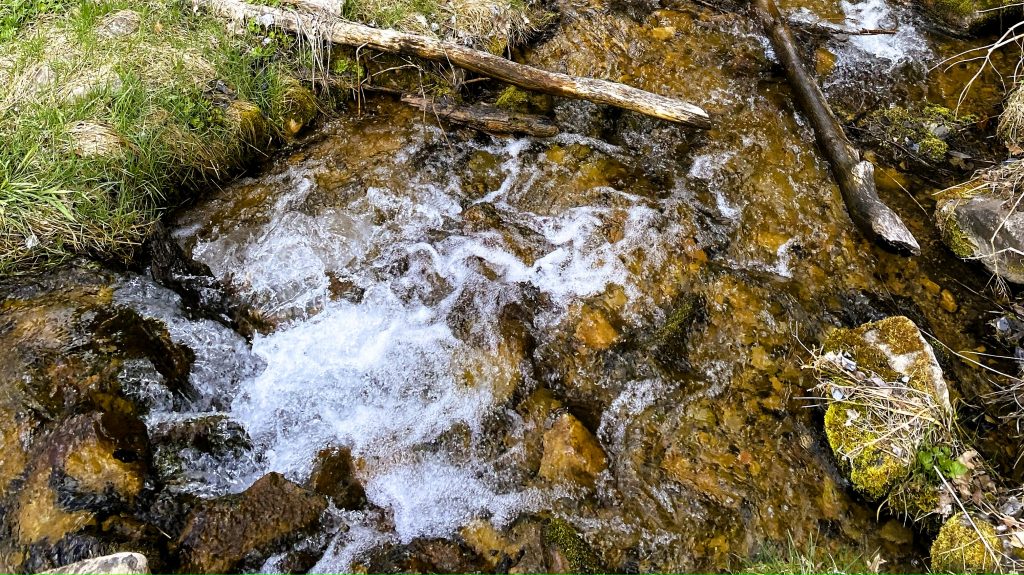
A few weeks ago, I was with my family up the canyon, wandering along a shallow creek. Jack had already tried to jump the creek three times before we arrived. His boots were soaked, pants dripping halfway up his waist. The water was cold—mountain-runoff cold. But he wasn’t bothered. He was delighted. He kept talking about the third jump, how close he’d been, how next time he knew he’d make it.
The discomfort didn’t register; the possibility did.
Watching him, something in me stirred—not envy, but recognition. I remember what that felt like.
It made me think about what it means to play—not the structured kind, not hobbies or recreation, but the unfiltered movement and curiosity kids access without hesitation. I see it every time I’m around anyone under twenty. They move freely, as if their bodies and the world are still in active conversation. Their prefrontal cortex is still developing, dopamine still hits like rocket fuel, and risk exists mostly as a concept—not a barrier. They live one step from a flow state.
I want more of that. Not recklessness, but freedom. Not nostalgia, but intention.
Kids don’t analyze the odds. They don’t over-index on the hypothetical. Their brains—still loose, still flexible—invite them to explore first and evaluate later. Adults, on the other hand, carry a fully developed prefrontal cortex that quietly runs injury predictions in the background of everything we do. It’s useful, but it can smother spontaneity. We counter dopamine with caution. We talk ourselves out of moments that once would have defined a whole afternoon.
I don’t want that to be the end of the story. So I’m setting a few intentions—simple, personal, doable.
1. Work back up to managed risk
I don’t need to reclaim the recklessness of childhood; I just want back the immediacy—the willingness to try, even if I hesitate.
Like the day I stood on a ten-foot cliff above a lake. Ten feet. Nothing dramatic. Kids were launching off it in rapid succession. But I stood there longer than I want to admit—doing mental geometry, anticipating the slap of cold water, imagining angles of entry and the possibility of getting hurt. My prefrontal cortex was doing its job.
But eventually I jumped. And the moment I surfaced, I felt something old come back online—joy earned through movement. I intend to chase that feeling more often: start small, build trust with my body again, and treat hesitation as a cue to stay curious, not shut down.
2. Use the gear—not as fear, but as freedom
As kids, we didn’t have half the safety gear we have now. We jumped off roofs with bedsheets for wings. We rode bikes without helmets. Half our childhood would be uninsurable today.
As an adult, I want to reclaim play by using the gear that lets me stretch farther, push harder, and stay safer: helmets, pads, shoes with grip, layers for warmth. Not because I’m fragile, but because these things open the door to what I used to love.
Gear isn’t an admission of weakness. It’s a permission slip.
3. Push myself because I now know I can
Kids play from instinct. Adults can play from evidence.
I’ve lived long enough to trust my resilience. I’ve solved bigger problems than a cold creek or a high jump. The older I get, the more I want to lean into the strength I’ve built—not to prove anything, but to experience more life.
I want to choose discomfort when discomfort leads to delight.
I want to choose motion even when stillness feels easier.
I want to choose the thing that makes me feel alive, not the thing that keeps me unscathed.
What I Intend to Do
I intend to wade back into the physical world with more curiosity.
To jump more. Climb more. Wander more.
To enter cold water on purpose.
To let my kids—and grandkids—be my teachers in courage.
To stand on the edge of small things and say yes sooner.
Mostly, I intend to play again.
Not because I’m trying to feel young, but because play is one of the ways we remember ourselves—our bodies, our senses, our joy. The risk-manager in me can stay; he just doesn’t get the final say anymore.
Jack taught me that on the edge of a creek: soaked to the waist, shivering, grinning wide because he’d almost made it. He wasn’t focused on the cold. He was focused on the possibility.
And that’s the part of childhood I want to carry forward—not the fearlessness, but the willingness.