 I’m offended by the smoke that has invaded our valley.
I’ve heard all my life that smoke follows beauty. Around a campfire, it’s an old joke. If the smoke drifts your way, you move to another log and let someone else become the punchline.
This week there is no other log.
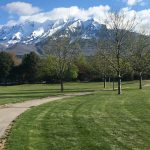
Most summer mornings, the sun rises over the mountains and washes the valley white. The cliffs sharpen. Utah Lake goes flat and bright. Noon is so ordinary it isn’t a color at all—it’s simply the condition under which everything else has its color.
This week the light has been a darker shade of yellow.
Not the gold of a late sunrise, but something stranger. The same unfamiliar quality the light had during the eclipse in 2024. The distance looks wrong. The shadows don’t feel trustworthy. Even the mountains seem to be standing farther away than they were.
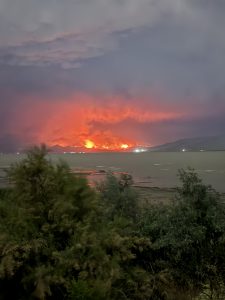
The cause is no mystery. Fires across the lake—human-caused and now measured in tens of thousands of acres—have turned the valley into a giant filter.
Their evidence arrives around the clock: fine white ash on the railing, the furniture, the stairs. The other day I blew it away twice. Each time the blower lifted it back into the air, and I stood watching myself turn ash into smoke again before heading back indoors.
Here’s what I keep snagging on.
I want to call the light wrong, but nothing is malfunctioning. The light is doing exactly what light does when something gets in its way. What changed isn’t the sun. What changed is that I can suddenly see the light—and seeing it at all is the problem.
Because normally I don’t. None of us do. The color of noon, the clarity of the air, the crisp edge of a ridge ten miles away—these aren’t things I look at. They’re the things I look through.
All summer the glass has been clean enough that I forgot it was there, which is the entire job of clean glass. A fire thirty miles away put a smudge on it, and for the first time in months I’m staring at the glass instead of the view.
The smoke didn’t add anything to my day. It subtracted something I never knew I had: the privilege of not noticing.
Most of what holds up an ordinary day works that way. The air. The light. Healthy knees. Reliable sleep. Friendships that don’t need repair. They do their jobs precisely by escaping attention. You meet them only when they fail.
The light becomes visible the moment it stops being trustworthy.
Eventually, the smoke will lift. The ridgelines will sharpen. The light will return to white, and I will once again stop seeing it altogether.
That’s the strange bargain.
The reward for things being fine isn’t that I’ll finally appreciate them every moment. It’s that they’ll quietly return to doing what they do best—making everything else visible while remaining almost invisible themselves.
Maybe that’s what the old campfire joke gets wrong.
Smoke doesn’t follow beauty.
It calls to mind everything beautiful I’d forgotten I was looking through.