If someone asked for volunteers to run laps around the high school track, I’d be the last hand up.
The reaction comes before the thought — flat, physical, immediate. Not fatigue. Something closer to boredom that has weight to it. The repetition, the grind, the constant counter-clockwise rotation, getting lapped by that one guy who appears to have been born wearing running shorts. I feel hives coming on just thinking about it. The myth of Sisyphus opens to my view: me, sans boulder, pushing toward what exactly?
My wife has asked why I repeat the same rides and hikes. It’s a fair question. If repetition is the point, the track is more efficient. Perfectly measurable. Consistent surface. No variables.
But the track doesn’t interest me. The trail does.
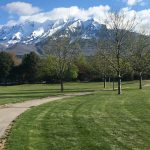
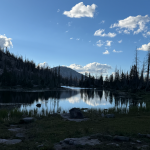
I know which trees fell on the canyon road last winter. Where the snow lingers into April. Which section washed out and came back. Where the aspens first turn yellow. Which corners hold ice longer than they should. I’ve built up a kind of knowledge there that isn’t accumulation — it’s stewardship. I move the deadfall. I clear the ankle-breakers that sloughed off the hillside overnight. I celebrate quietly when I find myself alone on a stretch that somehow escaped the crowds. Others use the trail. But in some way that doesn’t fully make sense to articulate, it’s mine. Not legally. Relationally. A borderline love I’d never muster for the track.
That impulse — caring for something beyond what’s required — shows up wherever I’ve attached myself to an outcome. I care when someone leaves trash, and I pack it out. The dog poop carefully scooped into green bags and left trailside has me puzzled — do people not know that “away” means the garbage cans at the trailhead? I feel the same about my front yard. I push snow before the HOA crew arrives. The renter next door? I’ve never seen them come out the front door.
That’s not a criticism. Researchers have found for decades that homeowners stay longer, know more neighbors, vote more in local elections, invest more in community life — not primarily for financial reasons, but because permanence changes attention. The mortgage isn’t the point. The commitment is. Ownership alters perception.
Albert Camus took an unlikely figure as his answer to whether life is worth living — Sisyphus, condemned by the gods to push a boulder uphill for eternity, only to watch it roll back down. Most readings stop at the futility. Camus didn’t. At some point in the descent, retrieving his stone, Sisyphus becomes conscious of his fate and chooses it anyway. That moment of lucid acceptance is where Camus locates something like happiness. The punishment wasn’t repetition. Human life is full of repetition. The punishment was a hill with no relationship — a task disconnected from anything worth loving. We must imagine Sisyphus happy, Camus concludes. Not because the stone got lighter. Because the hill became his.
My wife opens her scriptures every morning. Not because she hasn’t finished. Because the relationship isn’t finished. The same could be said of marriage, or parenting, or faith, or the canyon I keep returning to.
The work returns tomorrow. Not because something is broken. Because something is alive.
The repetition isn’t the point. The returning is.