
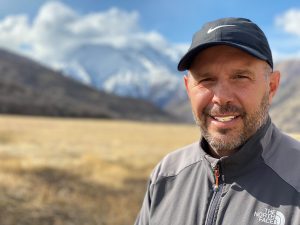
 I spend a lot of time outside—enough that I should probably worry more about skin cancer than I do.
I’d always figured my coloring kept me on the safer end of it: brown hair, hazel eyes, skin that browns before it burns.
Then someone close to me had a melanoma removed. It was caught early, before it had spread. The dermatologist removed it and expected everything to be fine. What stayed with me wasn’t the surgery. It was learning where melanoma goes when it isn’t caught early. Not across the skin where you can watch it.
Inward.
Quietly.
To places no mirror shows you.
So I looked up the coloring I’d been trusting. Brown hair (that I used to have) helps. Hazel eyes, less than I’d assumed. The reassurance I’d been resting on turned out to be built on a misunderstanding.
The most dangerous part of sunlight is the part you can’t notice.
Heat gets your attention. Brightness makes you squint. Ultraviolet light does neither. You can’t see it or feel it. Most of the time you don’t discover it until hours later, when your shoulders have gone pink and your nose has started to peel.
Hikers and mountain bikers learn this quickly. Climb a few thousand feet into the Wasatch on a cool June morning and a sunburn feels impossible. The air is crisp. You’re comfortable enough to leave the sunscreen in the car. There’s still snow tucked into the north-facing slopes—which feels like proof it’s too cold to burn—even as it throws ultraviolet light back into your face beneath the bill of your cap. The atmosphere is thinner up there. There’s simply less air between you and the sun.
What you feel—the cool, the comfort—has almost nothing to do with what’s happening to you.
I burned my eyes that way once, off snow glare. You don’t feel a thing until that night, when it seems there’s sand beneath your eyelids and even closing them doesn’t help.
Sunlight doesn’t behave the way most of us assume. We’d think the greatest danger belongs to people who spend every day outside. Instead, melanoma is more closely associated with intense, intermittent exposure: the office worker who spends a week at the beach, or the child who burns hard a few times every summer. A sunburn is often what unprepared skin does when the sun arrives all at once.
And the bill doesn’t come due for decades.
Picture a kid’s summer. Three months of exactly that exposure, on skin that started pale in June. By August they’re brown, hair bleached at the tips, and it reads as health. Then school starts. The tan fades over a few indoor weeks. By October there’s nothing left to see.
The badge disappears.
The record doesn’t.
I watched my daughter-in-law rub sunscreen into her kids’ faces the other day and heard her say, kindly, that she’s raising them with different assumptions than the ones we grew up with.
She’s right.
The teaspoon she works into each small face, arms, back, and legs is the prevention my generation mostly skipped. We baked ourselves in baby oil with sheets of aluminum foil propped beside us to throw even more sunlight onto our skin. We laugh about it now.
But someone told us that was a good idea. The waiting rooms at dermatology offices tell their own story.
None of this makes the sun the enemy. It would be strange to fear the thing that ripens peaches, dries laundry on a clothesline, coaxes tomatoes from vines, and changes the mood of an entire household the moment the clouds finally break after a gray week.
The gift and the cost arrive together.
I’ve come to think that’s true of more than sunlight. Some of life’s most important causes and effects refuse to stay together. The choice happens here. The consequence arrives years later. By then, we’ve usually forgotten they ever belonged to one another.
The goal was never to stay out of the sun.
Only to respect it before it gives you reason to.




A dear friend who is way more athletic than me had one small melanoma on his breast, it traveled to his femur. He never saw it coming and it nearly cost his life. Sunscreen, like other daily preventatives may be more effective than we thought think.