 My phone informs me nearly every day that I’ve been sedentary too long.
I don’t really need the notification. I feel it in my back, my shoulders, the particular heaviness that settles in after a full day of digital work. But then I guess I do need it. The irony isn’t lost on me—I’m using an app to tell me to stop using apps.
What bothers me more is that I keep waiting for permission from a screen to do something my body is already asking me to do.
Move.
With a last name like Walker, you’d think I’d know.
What’s in a name? For most of my life, I treated mine as decoration—an accident of inheritance. But somewhere between the 10,000-steps-a-day goal and a recent shirt purchase that reads go waste your time outdoors, I’ve begun to wonder if the name isn’t decoration at all.
Maybe it’s instruction.
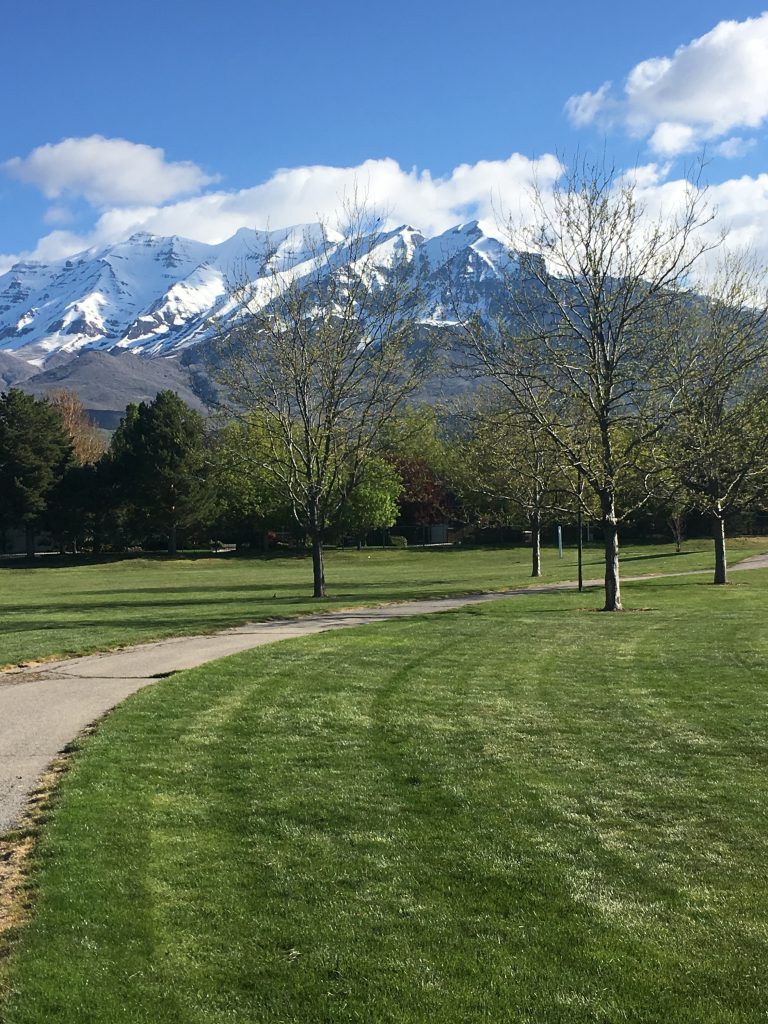
There’s a half-mile path around the large park near my home. It’s flat, measured, predictable. I can knock out a couple of laps between calls, check the box, and get back to work. I’ve walked it hundreds, probably thousands, of times.
But given another hour, I’ll drive ten minutes to the hills.
They’re harder. Longer. Less efficient. The trail climbs and falls, crosses rock and loose dirt, and requires me to pay attention to where I put my feet. I can’t really multitask there.
Which may be the point.
I’ve noticed what happens after a hard walk in the hills. My thinking clears. Not metaphorically. The fog that comes from hours at a screen lifts. My knees, which complained after a decade of desk work, complain less. I sleep better. I’m more patient. At three in the afternoon, I’m less likely to go looking for another source of caffeine to borrow a little more energy from tomorrow.
Science has explanations for much of this. Researchers at Stanford, for example, found that walking substantially increased creative output compared with sitting. Other research attaches names to the rest: cardiovascular adaptation, preserved mobility, bone density, cognition.
Useful things to know.
But I didn’t start walking for any of them.
The research came after the experience.
I walk because somewhere along the way walking stopped needing a reason.
That’s probably why I choose the hills when I have the time. The park path is perfectly good exercise. It records the same way on my phone. A step is a step to an app.
But a step isn’t always just a step.
In the hills, there’s uneven ground beneath my feet. Wind. Weather. Something over the next rise I can’t quite see yet. My breathing gets hard and eventually settles. The noise in my head does the same.
None of that feels particularly efficient.
It feels worthwhile.
My daughter texted this morning.
Hike?
Of course.
And the day began to make itself.
Maybe that’s what I’ve been missing about my name all these years. I thought inheritance meant receiving something from the people before you. Maybe part of it is passing something forward without realizing you’re doing it.
My daughter knows the hills. She knows that when someone asks if you want to go, the answer is usually yes.
My apps can count our steps. They can measure distance, elevation, heart rate, pace, calories, and probably a dozen other things I haven’t bothered to turn on.
They can’t measure why we went.
They can’t quantify the moment on a ridge when your breathing settles and, for a little while, the world stops demanding anything from you.
They can’t measure the value of doing something simply because the doing is enough.
Maybe the best gift my parents gave me wasn’t genetic luck or money or even particularly good advice.
Maybe it was a name.
Walker.